
The True Cost of Reactive Maintenance vs. a Planned Maintenance Program
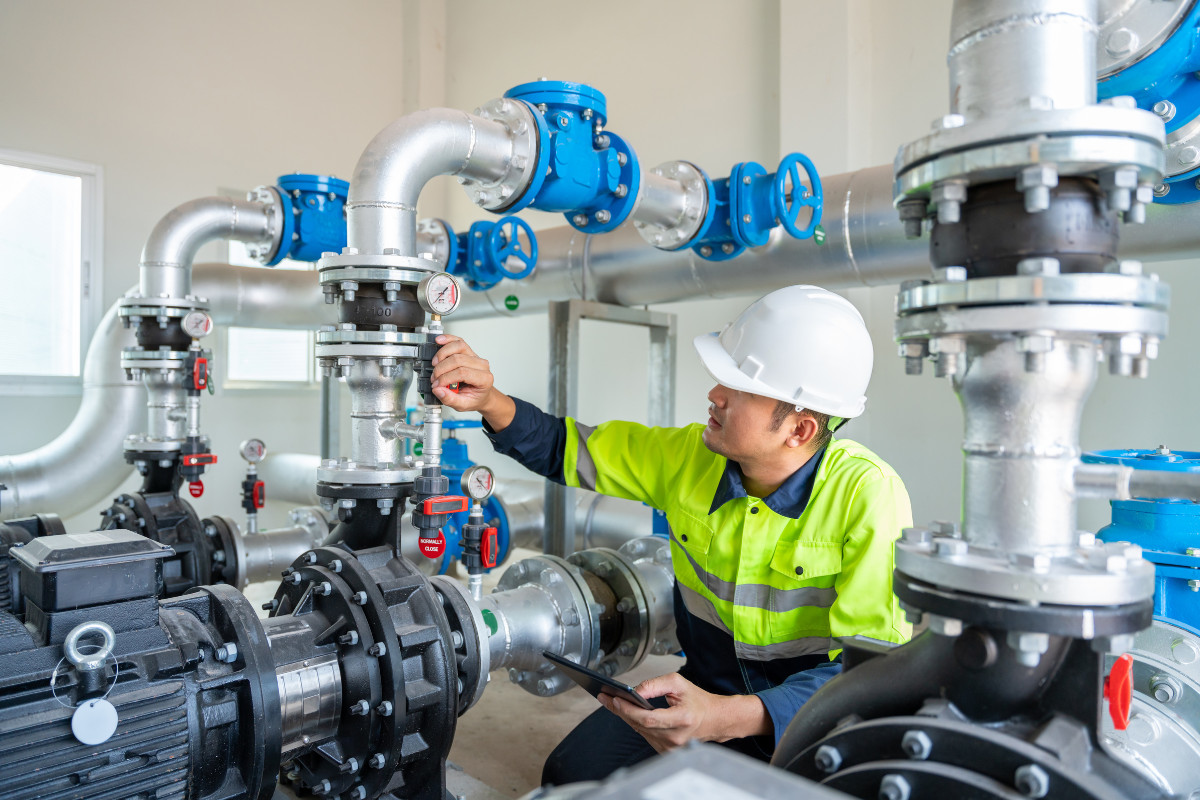
When a pump is running, it tends to fade into the background. Water moves, systems operate, and the equipment that makes it all possible rarely gets a second thought. That changes the moment something fails. A pump going down at 2 a.m. on a holiday weekend is not just an inconvenience. It is an unplanned expense that often costs several times more than the maintenance that could have prevented it.
For facility managers, property owners, and operations teams responsible for commercial, industrial, or municipal water and wastewater systems, the choice between reactive maintenance and a planned maintenance program is one of the most consequential financial decisions they will make regarding their infrastructure.
What Reactive Maintenance Actually Costs
Reactive maintenance, sometimes called “run to failure,” means waiting until equipment breaks down before taking action. On the surface, it appears to save money by avoiding the recurring cost of scheduled service visits. In practice, it consistently costs more. The reason is that the repair itself is only a fraction of the total expense.
When a pump fails unexpectedly, the costs extend well beyond the parts and labor required to fix it. Consider what typically follows an unplanned failure:
Emergency service calls carry premium rates compared to scheduled visits. Technicians may need to be dispatched after hours or on weekends, and expedited parts sourcing often comes at a markup. A repair that might cost a few thousand dollars during a planned visit can easily double or triple under emergency conditions.
Downtime is where the financial impact compounds. In a commercial building, a failed booster pump means tenants without water pressure. In a municipal lift station, it can mean sewage backups and potential regulatory violations. In an industrial facility, a process pump failure may halt an entire production line. The cost per hour of downtime varies by application, but it is almost always significantly more than the cost of the repair itself.
Secondary damage is another factor that reactive maintenance invites. A pump running with a failing bearing does not just destroy the bearing. It can damage the shaft, the seal, the impeller, and in some cases the motor. What begins as a single worn component becomes a full rebuild or replacement because the initial issue was never caught. PumpMan’s pump repair and motor repair teams frequently see equipment where a relatively minor issue cascaded into extensive damage that could have been avoided.
Energy waste is the least visible but often the largest cost over time. A pump that is losing efficiency due to worn internals, misalignment, or degraded seals draws more power to deliver the same output. Because energy represents the single largest expense in the lifecycle of a pumping system, even a modest decline in efficiency can add thousands of dollars in annual utility costs that go unnoticed on a monthly bill.
Shortened equipment life is the final piece. Pumps and motors that are maintained on a regular schedule routinely last years longer than identical equipment that is run without intervention. The capital cost of premature replacement is significant, particularly for larger commercial and industrial systems where a single pump can represent a five- or six-figure investment.
What a Planned Maintenance Program Includes
A planned maintenance program replaces the cycle of failure and emergency response with a structured approach built around scheduled inspections, performance monitoring, and preventive service. PumpMan’s planned maintenance programs are customized to each application, but they generally include visual and mechanical inspection of pumps, motors, and valves; vibration and temperature monitoring to detect early signs of wear; performance measurement against established baselines; lubrication, seal checks, and component tightening; and documentation of system condition and any recommended corrective actions.
The goal is not simply to keep equipment running. It is to keep equipment running efficiently, to identify small problems before they become large ones, and to give facility managers the information they need to plan and budget for repairs or replacements on their own timeline rather than being forced into them by a failure.
A system assessment can serve as a starting point for facilities that have been operating reactively. PumpMan’s assessments evaluate overall system condition, energy consumption, and performance against design specifications, providing a clear picture of where the system stands and what improvements would deliver the greatest return.
Comparing the Two Approaches
The difference between reactive and planned maintenance is not just a matter of cost. It is a difference in control. Reactive maintenance puts the equipment in charge of timing and budget. Planned maintenance puts the facility manager in charge.
Facilities operating under a planned maintenance program typically experience fewer emergency service calls, lower energy costs due to sustained efficiency, longer intervals between major repairs or replacements, less downtime and fewer disruptions to operations, and more predictable maintenance budgets with fewer financial surprises.
Industry data consistently supports the financial advantage of preventive approaches. While the specific numbers vary by equipment type and operating environment, studies across industrial and commercial sectors have found that reactive maintenance costs two to five times more than preventive maintenance when all direct and indirect expenses are accounted for.
Making the Transition
Shifting from a reactive approach to a planned maintenance program does not require replacing all of your equipment or overhauling your entire operation at once. It starts with understanding the current condition of your systems and establishing a baseline.
PumpMan works with facility managers, property owners, and municipal operators across the country to build maintenance programs tailored to their specific equipment, operating conditions, and budget requirements. Whether you manage a single building or oversee pump systems across multiple sites, the process begins with an evaluation of what you have and a plan for keeping it running at its best.
To learn more about PumpMan’s planned maintenance programs or to schedule a system assessment, contact your nearest PumpMan location. For facilities experiencing an active pump issue, PumpMan provides 24/7 emergency service with rapid response.