
Post-Storm Pump Inspection Checklist for Facility Managers
Before You Begin: Safety First
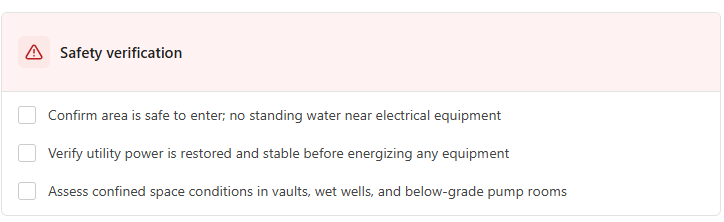
Before inspecting any pump equipment after a storm, confirm that it is safe to enter the area. Standing water in mechanical rooms or pump vaults may conceal electrical hazards. If floodwater has reached electrical panels, motors, or control enclosures, do not attempt to energize or operate equipment until a qualified technician has evaluated the installation. PumpMan provides 24/7 emergency service for situations where immediate professional response is needed. Make sure you:
- Confirm area is safe to enter; no standing water near electrical equipment
- Verify utility power is restored and stable before energizing any equipment
- Assess confined space conditions in vaults, wet wells, and below-grade pump rooms
If the facility has experienced significant flooding, vacuum truck and emergency pumping services may be required to remove standing water before inspections can safely proceed.
Electrical and Power Systems
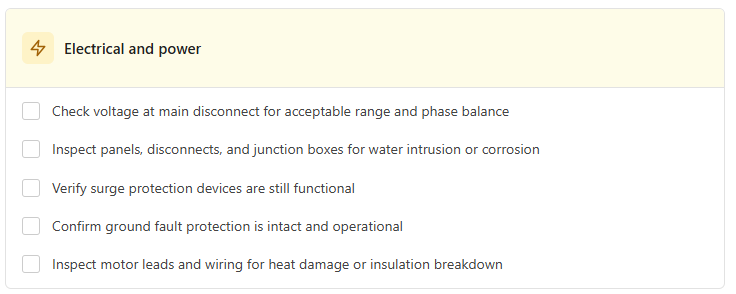
Electrical damage is one of the most common and most dangerous consequences of storm events. Lightning strikes and utility-side surges can damage motors, variable frequency drives, and control components even when the equipment itself was not directly exposed to water.
Begin by verifying that utility power has been restored and is stable. You will then want to:
- Check voltage at the main disconnect to confirm it is within acceptable range. Voltage sags, phase imbalance, or transient spikes during and after storms can cause motor damage that is not immediately obvious.
- Inspect all electrical panels, disconnects, and junction boxes for signs of water intrusion, including moisture, condensation, corrosion, or water staining. If any enclosure shows evidence of water entry, the equipment should be evaluated by a qualified electrician or service technician before being re-energized.
- Check surge protection devices if installed. Many surge protectors are sacrificial, meaning they absorb the surge but are no longer functional afterward.
- Verify that ground fault protection is intact and operational.
- Inspect motor leads and wiring connections for signs of heat damage or insulation breakdown, which can indicate a surge event.
Pump and Motor Condition
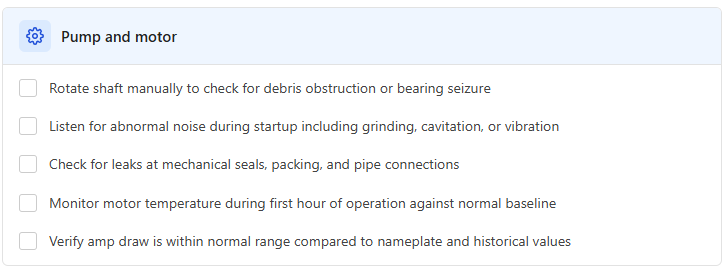
Even if a pump restarted automatically after a power restoration, it may not be operating normally. Post-storm conditions including debris ingestion, sediment infiltration, and seal damage from running dry or running against abnormal head conditions can all degrade performance. Check the following items:
- Attempt to rotate the pump shaft manually before restarting, if the configuration allows it. Resistance, grinding, or inability to rotate may indicate debris obstruction, bearing seizure, or internal damage.
- Listen for abnormal noise during startup and initial operation. Grinding, cavitation, or unusual vibration are indicators that something changed during the storm event.
- Check for visible leaks around mechanical seals, packing, and pipe connections. Pressure changes during a storm, including water hammer from rapid valve actuation or sudden flow changes, can compromise seals and joints.
- Monitor motor temperature during the first hour of post-storm operation. A motor running hotter than its normal baseline may have sustained winding damage from a surge or may be working against a partially obstructed system.
- Verify amp draw is within normal range compared to nameplate and historical values.
If any of these symptoms are present, PumpMan’s pump repair and motor repair teams can provide on-site diagnostics and corrective service.
Controls and Monitoring Systems
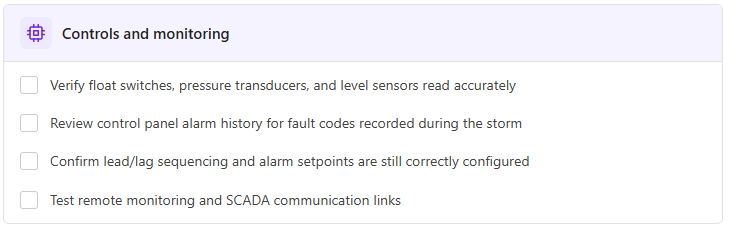
Control systems are particularly vulnerable to storm damage because they combine sensitive electronics with field-mounted sensors that are exposed to the environment. Ensure the following:
- Verify that all float switches, pressure transducers, and level sensors are functioning and reading accurately. Flooding can displace floats, coat sensors with sediment, or damage wiring connections.
- Check control panel displays and alarm history for fault codes, error messages, or unusual cycling patterns that occurred during the storm.
- Confirm that lead/lag pump sequencing, alternation logic, and alarm setpoints are operating as configured. Power interruptions can sometimes reset programmable controllers to default settings.
- Test communication links for any remote monitoring or SCADA systems. Cellular and radio-based communication equipment can be disrupted by storm activity, leaving operators without visibility into system status.
PumpMan’s industrial controls team can assist with control system troubleshooting, recalibration, and repair following storm events.
Wet Wells, Vaults, and Pump Stations
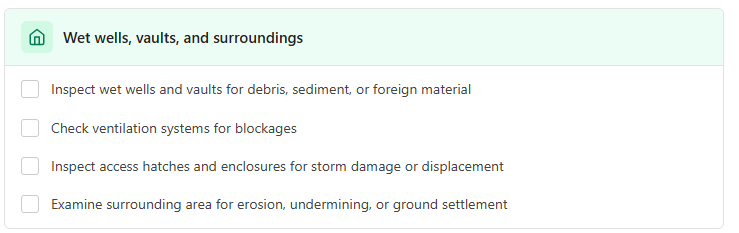
The physical environment around the pump equipment often sustains as much storm impact as the equipment itself. See if any of the following have been affected:
- Inspect wet wells and pump vaults for accumulated debris, sediment, gravel, or foreign material that may have entered during flooding. Debris in a wet well can obstruct pump intakes, damage impellers, and foul float switches.
- Check vault and pit ventilation systems. Flooding can block vents, and standing water conditions can create confined space hazards from accumulated gases.
- Inspect access hatches, covers, and enclosures for damage or displacement. Storm winds and floodwater can compromise physical security, creating both safety hazards and exposure to further weather damage.
- Examine the area surrounding the pump station for erosion, undermining, or settlement that could affect piping or structural supports.
Piping and Valves
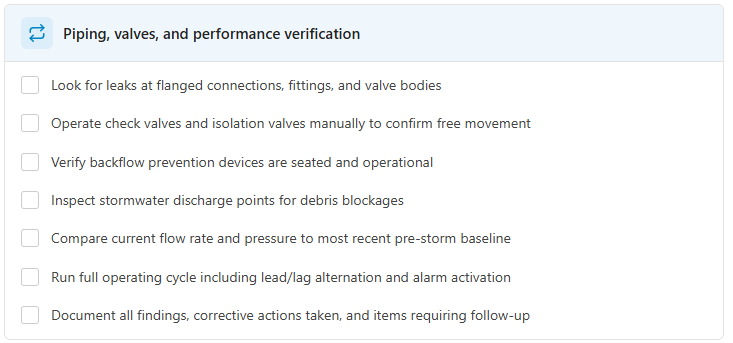
The piping system connecting pumps to the distribution or collection network should be checked for storm-related damage, particularly in exposed or above-grade installations. You’ll want to:
- Look for visible leaks at flanged connections, fittings, and valve bodies. Thermal expansion, ground movement, and water hammer during storm events can stress joints that were previously secure.
- Operate check valves and isolation valves manually to confirm they move freely. Debris and sediment can lodge in valve seats, preventing full closure and allowing backflow.
- Verify that backflow prevention devices are seated and operational. Floodwater can create reverse-flow conditions that overwhelm improperly maintained backflow protection.
- In stormwater systems, inspect discharge points for blockages caused by debris accumulation at outfall locations.
- Compare current flow rate and pressure to most recent pre-storm baseline.
- Run full operating cycle including lead/lag alternation and alarm activation.
- Document all findings, corrective actions taken, and items requiring follow-up.
Performance Verification
Once the immediate inspection is complete and any obvious issues have been addressed, verify that the system is performing to its normal operating parameters.
Compare current flow rate and discharge pressure to the most recent pre-storm baseline. A measurable decline in either metric may indicate internal damage that is not visible externally. Monitor amps draw on pump motors and compare to nameplate and historical values. Elevated amp draw can indicate a partially obstructed impeller, increased system resistance, or motor degradation. Run the system through a complete operating cycle, including lead/lag alternation, high-level alarm activation, and any automated sequences, to confirm full functionality. Document all findings, including system status, any abnormalities observed, corrective actions taken, and any items requiring follow-up. This documentation supports both your internal maintenance records and any insurance or regulatory reporting that may be required.
If baseline performance data is not available, a system assessment can establish current operating benchmarks and identify any latent damage that may not be apparent during a visual inspection.
Building Storm Readiness Into Your Maintenance Program
Post-storm inspections are essential, but the most effective approach to storm resilience is preparation before severe weather arrives. A planned maintenance program that includes pre-season equipment checks, documented performance baselines, verified backup power systems, and up-to-date control calibration puts your facility in a significantly stronger position when a storm does occur.
Facility managers who know their systems are well maintained and who have current performance data on file can move quickly through post-storm inspections, identify genuine damage versus normal operation, and restore full function with less downtime and less risk.
To schedule a post-storm inspection or to discuss incorporating storm readiness into your ongoing maintenance program, contact your nearest PumpMan location.